Four Frames, No Retakes: Inside Europe’s Analogue Photobooth Revival
In London, Paris, Barcelona and Berlin, old photographic machines are attracting a new generation. The appeal isn’t a perfect portrait. It’s everything that happens when perfection is no longer an option.
The curtain closes. The clock starts.
There is a small moment of uncertainty inside an analogue photobooth. You pull the curtain, adjust the stool and look straight into a lens that offers no helpful preview. Then comes the flash. And another. Four chances to get it right, although “right” might be the least interesting outcome.
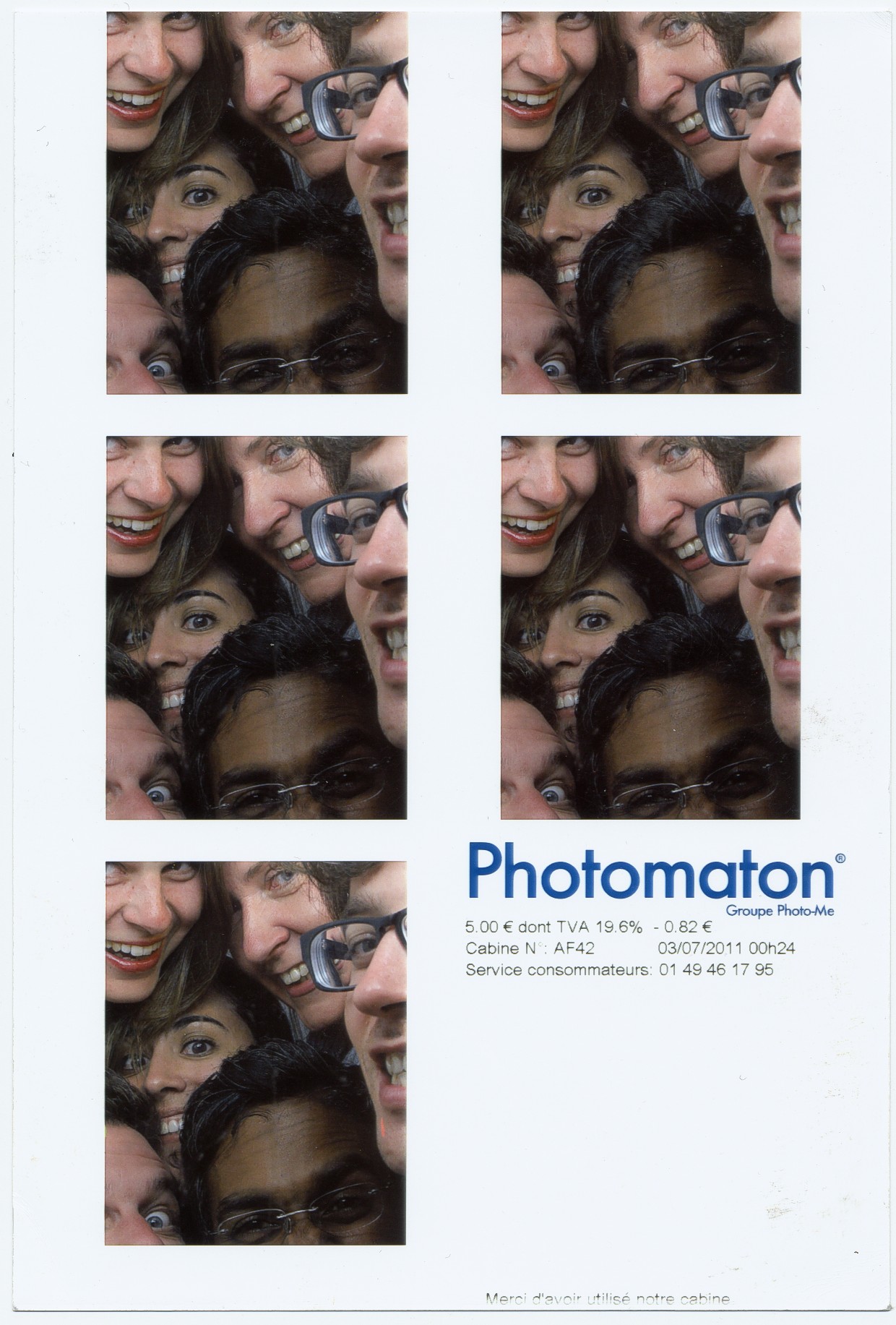
Minutes later, a narrow strip of photographs emerges. Someone has blinked. Someone has laughed too soon. The third frame is unexpectedly beautiful. There is no delete button, no retouching, no second version waiting in a cloud folder. The pictures exist because you were there.
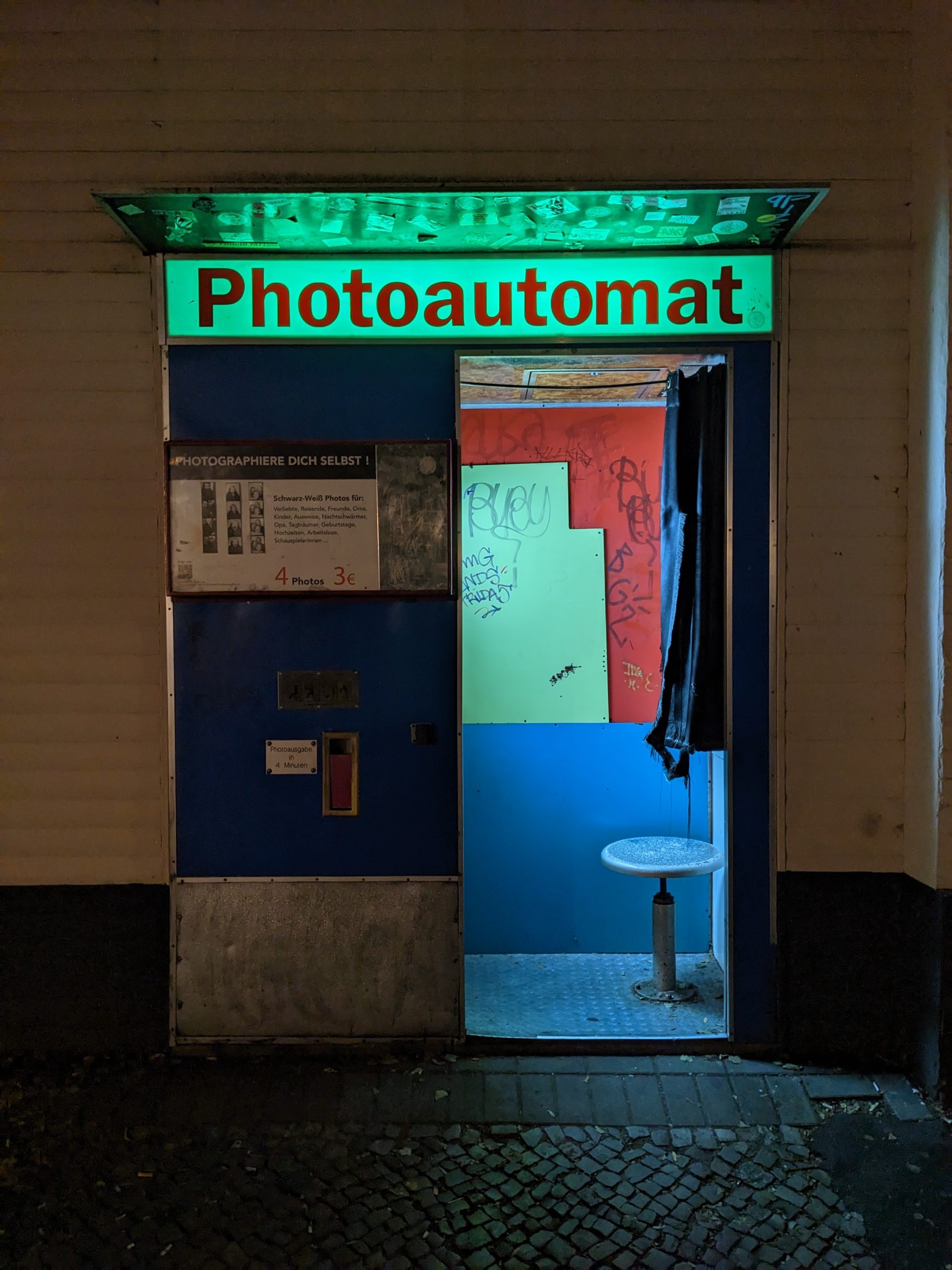
Across Europe, that modest ritual is finding an enthusiastic audience again. In London and Barcelona, AUTOFOTO rescues and maintains vintage machines. In Paris, Fotoautomat has been restoring analogue booths since 2007. Berlin’s Photoautomat keeps a network of street-side booths in operation. The machines aren’t simply props with an old-fashioned filter: the defining ones expose photographic paper and develop it through a chemical process.
A century-old idea with a surprisingly modern audience
The automatic portrait booth became a public sensation a century ago, making studio-style photographs available to people who didn’t need an appointment with a photographer. Its history runs through railway stations, shopping centres, nights out and, eventually, art. Andy Warhol turned photobooth portraits into raw material for his work. Today, the machines have a different kind of cultural currency: an image you can hold, share or slip inside a book.
The distinction matters. Many contemporary “retro photobooths” are digital cameras paired with printers and nostalgic frames. An original analogue booth is closer to a tiny working darkroom. Its mechanical parts, chemistry and photographic paper need specialist attention. According to a 2025 report in Le Monde, fewer than roughly 200 analogue booths remained operational worldwide at the time of reporting. That figure is an estimate, not a live count, but it conveys the fragility of what is being preserved.
The machine is automatic. Keeping it alive isn’t.
A century ago, automatic portraiture promised something radical: a portrait without an appointment, a studio or a photographer giving instructions. Anatol Josepho’s Photomaton brought the idea to a mass audience in 1925. Later, artists including Andy Warhol and Cindy Sherman explored the booth’s peculiar tension between performance and chance. The machine removes the photographer, but never removes the act of posing.
Look beyond the curtain and the real story is human labour. AUTOFOTO’s founder Rafael Hortala Vallve bought a 1960s booth in 2009 for a friend’s wedding in Barcelona. It missed the event, travelled to London and eventually found a home at Pizza East in Shoreditch. The restoration project expanded because a second machine was needed for spare parts. Today technicians adjust mechanisms, repair electrical systems and keep an increasingly rare craft in circulation. “Automatic” describes the visitor’s experience, not the work behind it.
And that changes the way you look at the strip. The photograph is not only a souvenir of the people inside. It is evidence of the people outside who made the machine work.

History and restoration: AUTOFOTO, Our Story · AUTOFOTO, What We Do.
London: a portrait between books, art and late trains
London’s surviving booths often turn up where you might least expect a darkroom: inside a bookshop, beside a gallery or in a hotel lobby. At Foyles, 107 Charing Cross Road, the machine sits within one of the city’s best-known bookshop addresses. The Photographers’ Gallery, 16–18 Ramillies Street, makes an especially fitting stop: a photographic portrait produced by a machine, a short walk from the galleries upstairs.
Other listed AUTOFOTO locations include Coal Drops Yard in King’s Cross, Old Spitalfields Market and The Hoxton Shoreditch. Together, they form an alternative map of London: not the city of landmarks, but the city of places where people pause for a few minutes and make something tangible.
AUTOFOTO’s origin story is suitably accidental. Founder Rafael Hortala Vallve bought a 1960s booth in 2009 for a friend’s wedding in Barcelona. The machine eventually reached London and found a public home at Pizza East in Shoreditch. One restoration led to another. What began with a single machine became a project dedicated to keeping an endangered photographic process alive.
Paris: the photobooth as a small piece of cultural heritage
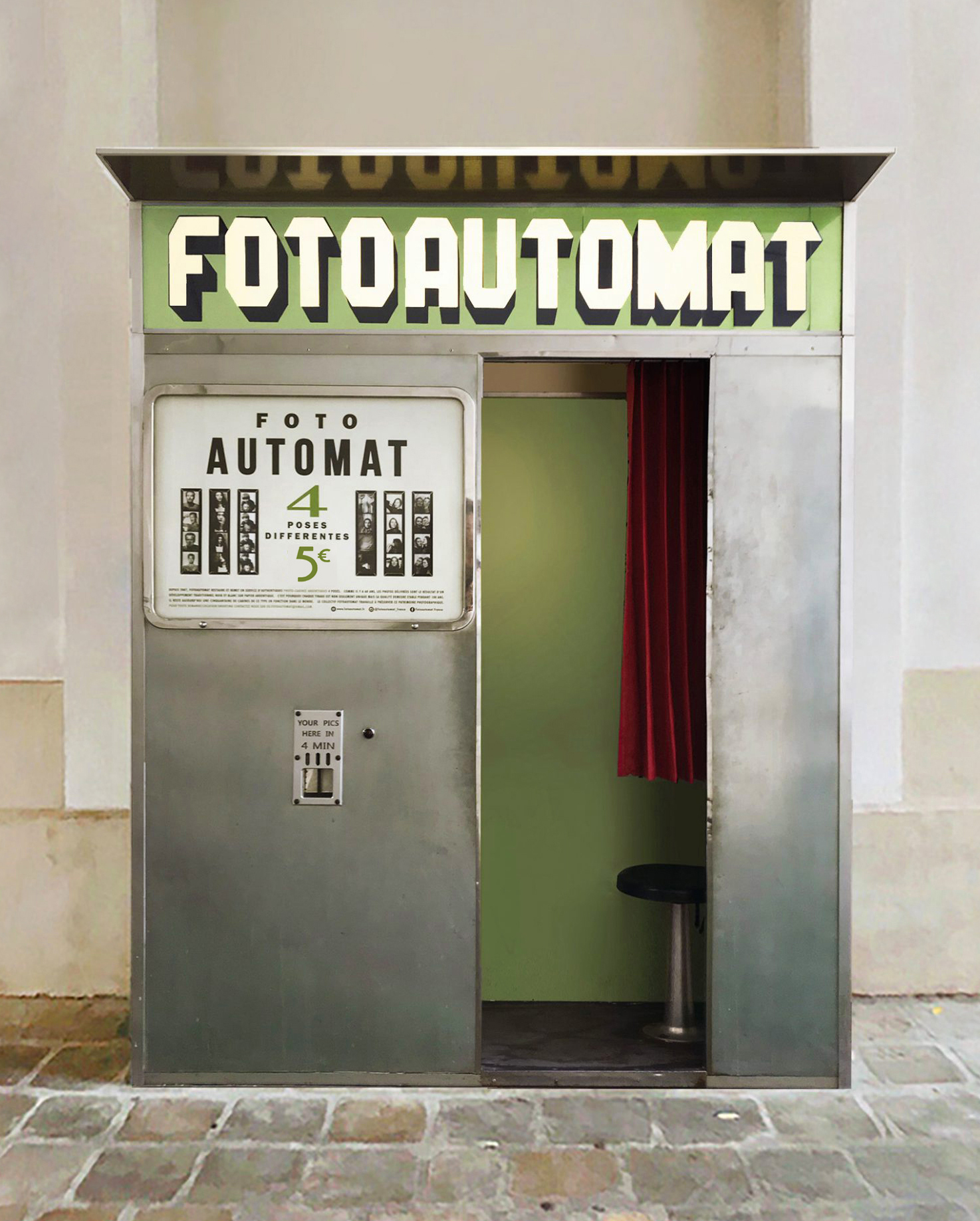

Paris lends the ritual a different setting. Fotoautomat’s booths appear in places such as the Palais de Tokyo, 13 Avenue du Président Wilson, and at 53 Rue des Trois Frères in Montmartre. Another Montmartre location stands at 4 Rue Androuet. Their appeal is not that they reproduce a polished Parisian fantasy. It is that they interrupt it.
You can spend an afternoon trying to photograph a city perfectly. Then you step into a box and allow the city to photograph you imperfectly. The result is often more personal than the hundreds of images on your phone.
Fotoautomat says it restores and returns genuine vintage chemical-process booths to service, frequently in spaces connected with art and culture. The work involves more than installing a beautiful object. It means maintaining a technology that was never designed to survive forever.
Barcelona: the analogue ritual becomes a social event
In Barcelona, the analogue booth has found a particularly visible second life. One well-known stop is Dubblefilm, Carrer de Verdi 28, in Gràcia. The specialist film shop and its booth have become a destination for people interested in physical photography, and for people who simply want a strip of pictures with friends.
A November 2025 report in El Periódico described queues at the Dubblefilm machine and the surprise of younger visitors discovering that the fresh prints could still be wet from chemical processing. It also described the curious collision of old and new: visitors filming their analogue experience on their phones to post it online.
That’s the contradiction at the heart of the revival. The photobooth isn’t necessarily an escape from social media. Sometimes it becomes content for social media. But the little strip remains an object that belongs to the people who were there, not to a feed.
AUTOFOTO also lists Barcelona locations at Chandal, Carrer d’en Tarantana 16, Ocaña, Plaça Reial 13–15, and The Hoxton Poblenou, Avinguda Diagonal 205.
Berlin: the city that never needed to make it fashionable
At RAW-Gelände, Photoautomat lists something rarer than another black-and-white strip: RAW 3, a working analogue colour booth. At Mauerpark, the operator distinguishes horizontal and vertical strips. Even within the same city, the format changes how a moment is framed. See the operator’s live Berlin list.
In Berlin, photobooths feel less like an imported trend and more like part of the city’s visual vocabulary. Photoautomat lists machines at Mauerpark, Eberswalder Straße 2, and RAW-Gelände, Revaler Straße 99. Some locations offer unusual strip formats; the operator even lists an analogue colour booth at RAW.
These are portraits made in public, often after a concert, a long walk or a night out. They make no promise of elegance. Their charm is closer to a souvenir from an experience than a photograph staged for an audience.
Why four imperfect pictures still matter
The easiest explanation for the comeback is nostalgia. But nostalgia alone doesn’t explain why people who never grew up with these machines want to use them.
Maybe it’s the constraint. Four frames create a beginning and an end. The fixed camera and unforgiving timing turn the portrait into a collaboration between people, light and chance. Waiting for the strip adds a tiny interval of suspense. And because the result can’t be endlessly revised, the photograph becomes evidence of a particular moment rather than a carefully managed version of it.
None of this makes analogue photography morally superior to digital photography. A phone can capture extraordinary things. The booth simply asks for a different kind of attention: a few minutes in one place, with whoever has squeezed onto the stool beside you.
In a culture that makes images effortless to produce and effortless to forget, four small portraits can feel unexpectedly substantial.
Where to find genuine analogue photobooths in Europe
These addresses are drawn from operators’ published location lists, checked in October 2026. Machines can be moved, serviced or temporarily unavailable, so check the operator’s current listing before making a special trip.
London
- Foyles — 107 Charing Cross Road
- The Photographers’ Gallery — 16–18 Ramillies Street
- Coal Drops Yard — Lower Stable Street
- Tate Modern — Bankside, Level 1
- Old Spitalfields Market — 65 Brushfield Street
- The Standard — 10 Argyle Street
- Netil House — 1 Westgate Street
- Waterstones Gower Street — 82 Gower Street
- Battersea Power Station — Circus Road West
- The Hoxton Holborn — 199 High Holborn
- The Hoxton Shoreditch — 81 Great Eastern Street
- Selfridges Cinema — 400 Oxford Street
- Mercato Metropolitano — 42 Newington Causeway
- Museum of Youth Culture — 51 St Pancras Way
Paris
- Palais de Tokyo — 13 Avenue du Président Wilson
- Montmartre — 53 Rue des Trois Frères
- Montmartre II — 4 Rue Androuet
- Bonton — 5 Boulevard des Filles du Calvaire
- Galeries Lafayette Champs-Élysées — 60 Avenue des Champs-Élysées
- Pavillon Puebla — Parc des Buttes-Chaumont, Avenue Darcel
- Citadium — 56 Rue de Caumartin
Barcelona
- Dubblefilm Store — Carrer de Verdi 28
- Chandal — Carrer d’en Tarantana 16
- Ocaña — Plaça Reial 13–15
- The Hoxton Poblenou — Avinguda Diagonal 205
- Cameras and Films — Carrer d’en Rosic 3
- Galeries Maldà — Plaça del Pi 4
- Teatre Lliure — Plaça de Margarida Xirgu 1
- DubbleLab — Carrer de Zamora 99, 3-2
- Mercantic (Sant Cugat) — Carrer de l’Ermita 1–5, Sant Cugat del Vallès
Berlin
- Mauerpark — Eberswalder Straße 2
- RAW-Gelände — Revaler Straße 99
- Mauerstreifen — Bernauer Straße 47A
- ACUD — Veteranenstraße 21
- Kulturbrauerei — Schönhauser Allee 36
- Schönhauser Allee — Schönhauser Allee 63
- Bersarinplatz — Petersburger Straße 81
- Schlesisches Tor — Oppelner Straße 48
- Markthalle Neun — Eisenbahnstraße 42
- Modulor — Prinzenstraße 85
- C/O Berlin — Hardenbergstraße 22–24
- Holzmarkt — Holzmarktstraße 25
- Hamburger Bahnhof — Invalidenstraße 50–51
- Warschauer Straße — Warschauer Straße 54
Before you go: a few practical details
These are working historic machines, not guaranteed attractions. A booth may be temporarily out of service, moved or waiting for photographic supplies. Check the operator’s current location page before travelling, and confirm the opening hours of any bookshop, gallery or hotel that houses it. Bring an alternative way to pay: some machines accept coins, others cards, and prices vary by location. Leave time for the chemical development process. The wait is part of the experience.
Take the strip with you
The best photograph from a photobooth is not always the sharpest one. Sometimes it’s the frame where nobody was ready, or the one where everyone stopped trying. Four pictures, one narrow strip, a few minutes you can’t reproduce. Put it in your wallet. Forget about it. Find it months later. That’s when the photograph gets interesting again.
Frequently asked questions
Are vintage photobooths really analogue?
Some are; others only imitate the appearance. A genuine analogue photobooth exposes light-sensitive photographic material and develops the photographs chemically. Look for an operator that explicitly describes its machines as analogue or chemical-process booths.
Where can I find an analogue photobooth in London?
AUTOFOTO lists booths at Foyles on Charing Cross Road, The Photographers’ Gallery near Oxford Circus, Coal Drops Yard in King’s Cross and several other locations across the city.
Are there analogue photobooths in Paris, Barcelona and Berlin?
Yes. Fotoautomat operates vintage booths in Paris; AUTOFOTO lists machines in Barcelona; and Photoautomat maintains multiple Berlin locations. Consult their official location pages before visiting.
Can I retake the pictures?
Usually not within the same session. Traditional machines produce a fixed sequence of exposures. That’s part of their appeal: the surprises are included.
Cover photograph: Photoautomat in Berlin, photographed by Spinarak (2023). Wikimedia Commons · CC BY-SA 4.0. Image resized for the website.

Reporting and location sources: AUTOFOTO, Our Story; AUTOFOTO London; AUTOFOTO Barcelona; Fotoautomat; Fotoautomat addresses; Photoautomat Berlin; El Periódico, 15 November 2025; Le Monde, 7 December 2025.
For Instagram, save the Story photo and add the copied link to your Instagram Story. Direct publishing from a website is not supported.
More Stories