

Sometimes music finds you
A chance encounter in Turin reminds us why there is still room for discovering music beyond the algorithms.
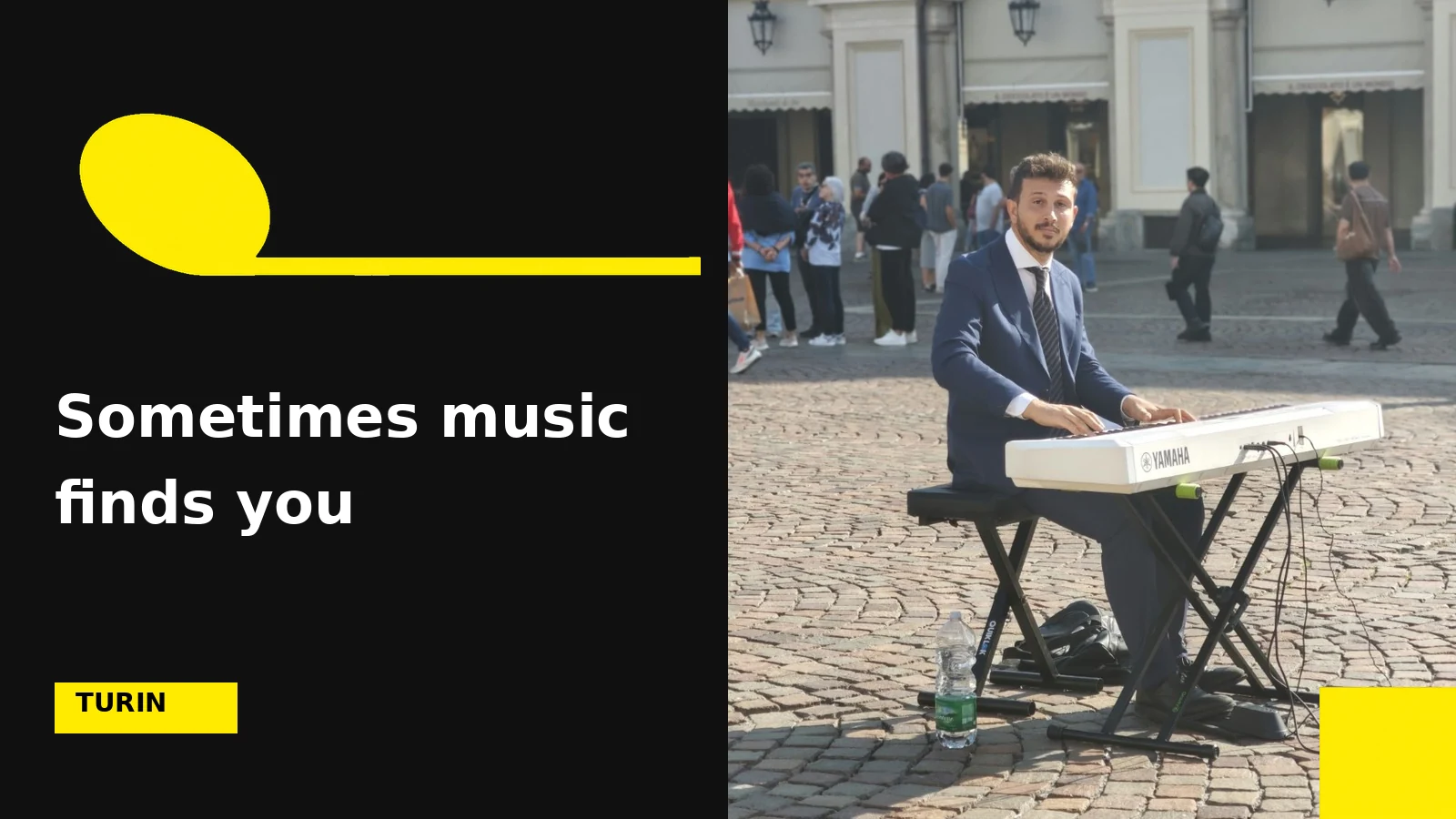
In Turin, Italy, we came across a musician playing a keyboard in the street. We hadn’t gone looking for him. Our photographs show a white instrument, a blue suit, cables on the cobbles and people crossing the square. We took a few pictures and shared the encounter on Instagram. But the question it left us with deserves more space: how much does it still matter to discover music before someone, or something, has chosen it for us?
We don’t know the musician’s name. What stays with us is the sound of the keyboard and that image: someone playing as the square keeps moving around him. We didn’t need to know anything else to listen.
In an encounter like this, the music arrives with its surroundings. There is the distance from which you hear it, the footsteps of people passing, the space between you and the instrument. You can’t quite separate what you hear from what you are experiencing. When you think back to it, you remember the square too. The music occupies a particular spot in the city and, for a moment, in your day.
Discovery without a recommendation
A playlist can introduce us to a track we would never have found on our own. Platform recommendations are useful; it would be unfair to cast them as the enemy of curiosity. The limitation comes when they become our only way in, when every listen starts with a selection shaped by what we have already played, searched for or shared.
On the street, that step is missing. You haven’t selected a genre, searched for a mood or opened an artist’s profile. You encounter something you didn’t ask for. You might like it. You might not. You can keep walking. That freedom is part of what makes the encounter interesting: music doesn’t have to match an existing preference to deserve a hearing.
Attention changes too. In a feed, a performance sits alongside notifications, captions and other content ready to replace it. In person, you can watch the hands on the keyboard and follow the player’s pace. That doesn’t automatically make the listening more profound. It means you can give it time without a screen immediately offering you something else.
A city makes room for the unexpected
The encounter in Turin reminded us of a simple possibility: a city lets music reach people who haven’t bought a ticket, followed an account or decided to go to a concert.
That encounter raises a wider question: how much room do we leave for people we don’t yet know? Seeking out independent music also means being willing to listen before we have a ready-made reason to do so.
A name, a link or a recording can help us follow up on a discovery. Digital tools can come afterwards, to find an artist again or share a track. The street and the platforms needn’t compete: they can be different stages of the same listening experience. What matters is keeping that first gesture, noticing that someone is playing.
That curiosity also guides FriBitRadio and the way we look at London, Barcelona and Turin: making room for independent music and telling stories about what we encounter, without asking every experience to become a recommendation. Sometimes it is enough to keep a scene and the question it opened up.
We didn’t go looking for all the music that stays with us.
More Stories
In-Edit Barcelona 2026: when cinema makes us listen again
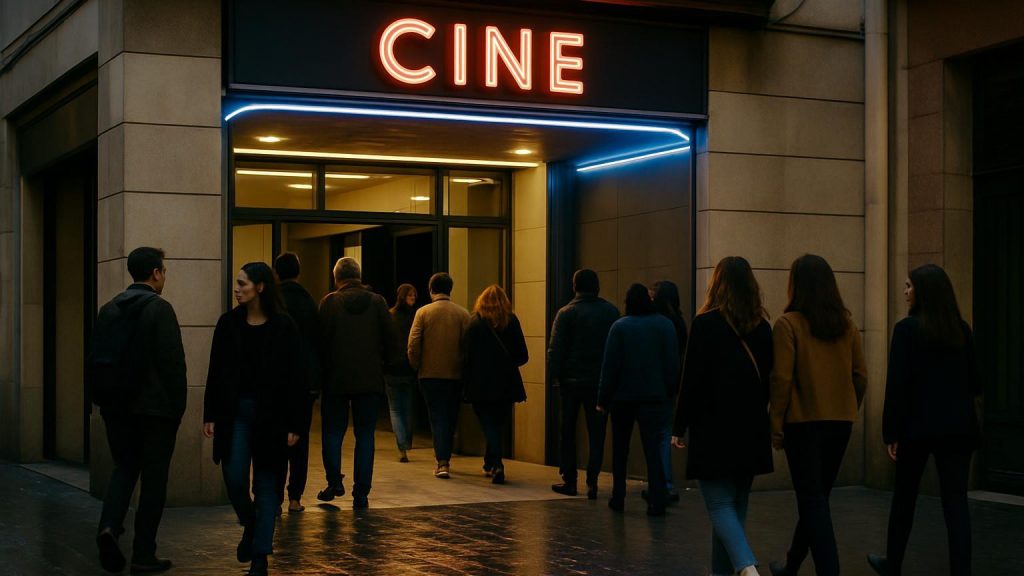
From 29 October to 8 November, In-Edit Barcelona brings 70 titles to Mooby Aribau Cinemes. The point is not to see them all, but to leave wanting to hear something again.